Under 18
ADHD at school: when one look ruins your day.
In the UK, call Childline free on 0800 1111, any time, or 999 if you're in danger. Not in the UK? Find the number for your country.
This page is for you if you're under 18 and you have ADHD, or you think you might. Everything here is free. You don't need an email.
A teacher says your name in a certain tone and you can't think for the rest of the lesson. You post in the group chat and nobody replies. Your coursework deadline was weeks away, and now it's tomorrow. You held it in all day, then shouted at whoever was home.
If that sounds like you, it doesn't mean you're lazy or rude. ADHD can be part of it. Other things can be part of it too, like stress or not sleeping enough. Whatever is behind it, you can learn what sets it off and what helps.
The Quick exit button takes you straight to BBC Bitesize. This page will still be in your browser history.
Not OK right now? You don't have to wait until it's an emergency.
Thinking about self-harm or suicide? Tell someone today. In the UK: Childline 0800 1111, or Papyrus HOPELINE247 on 0800 068 4141 or text 88247. In danger now, call 999.
Want to talk to someone? In the UK, call Childline on 0800 1111, free, any time. Or chat online with a counsellor at childline.org.uk.
Not in the UK? In danger, call 911 (US, Canada), 000 (Australia), 111 (New Zealand) or 112 (Ireland and Europe). Find a line for young people in your country.
Telling a trusted adult counts too.
At school
School asks you to start work on time, meet deadlines, keep your phone in your bag and stay calm when a teacher tells you off in front of everyone. When it goes wrong, your phone gets taken off you or you're put on report. ADHD can make all of that harder.
Free tracker
RSD Moment Tracker
RSD (rejection sensitive dysphoria) is a name many people with ADHD use for rejection feeling much worse than it seems to for others. It isn't a diagnosis, but the feeling is real. A flat reply or a look ruins your whole day. A teacher's tone, a friend leaving you on read, the group chat going quiet after you post, getting moved away from your friends in the seating plan. Log it in a few seconds and see what sets it off.
Open the tracker →Free tracker
ADHD Moment Tracker
You missed a coursework deadline you knew about for weeks. You sat down to revise and couldn't start. A free period went and you don't know what you did with it. Someone interrupted you in class and you forgot what you were doing. Pick what happened and get one small thing to try next.
Open the tracker →Free tracker
Burnout Moment Tracker
You struggled to get out of bed for school. You couldn't face it. You felt numb all day. You snapped at someone at home after holding it in since the morning. Log it in a few seconds and see the pattern. If you've felt low, numb or can't face things most days for two weeks or more, tell your doctor (GP). That isn't always ADHD, and help is there.
Open the tracker →Friends and group chats
With ADHD, friendships can feel easy to lose. You say something and replay it all night. You find out about plans from someone's story. It can hurt far more than you can explain to anyone.
When anger takes over
When anger takes over
Anger is common with ADHD. It can come on fast and feel much bigger than you expected. It doesn't make you a bad person.
Ask a teacher you trust or your school's learning support coordinator (SENCO in the UK) about an agreed way to get a break at school, like a time out card or a quiet signal. Agree where you'll go and for how long.
Talk to your doctor (GP) about it too.
If someone else's anger at home scares you, it isn't yours to fix and it isn't your fault. Call Childline (UK) on 0800 1111.
Free card packs
These are free for anyone under 18. You can share them with friends. Each pack is a PDF you can save to your phone. There's no email and nothing to pay.
Free card pack
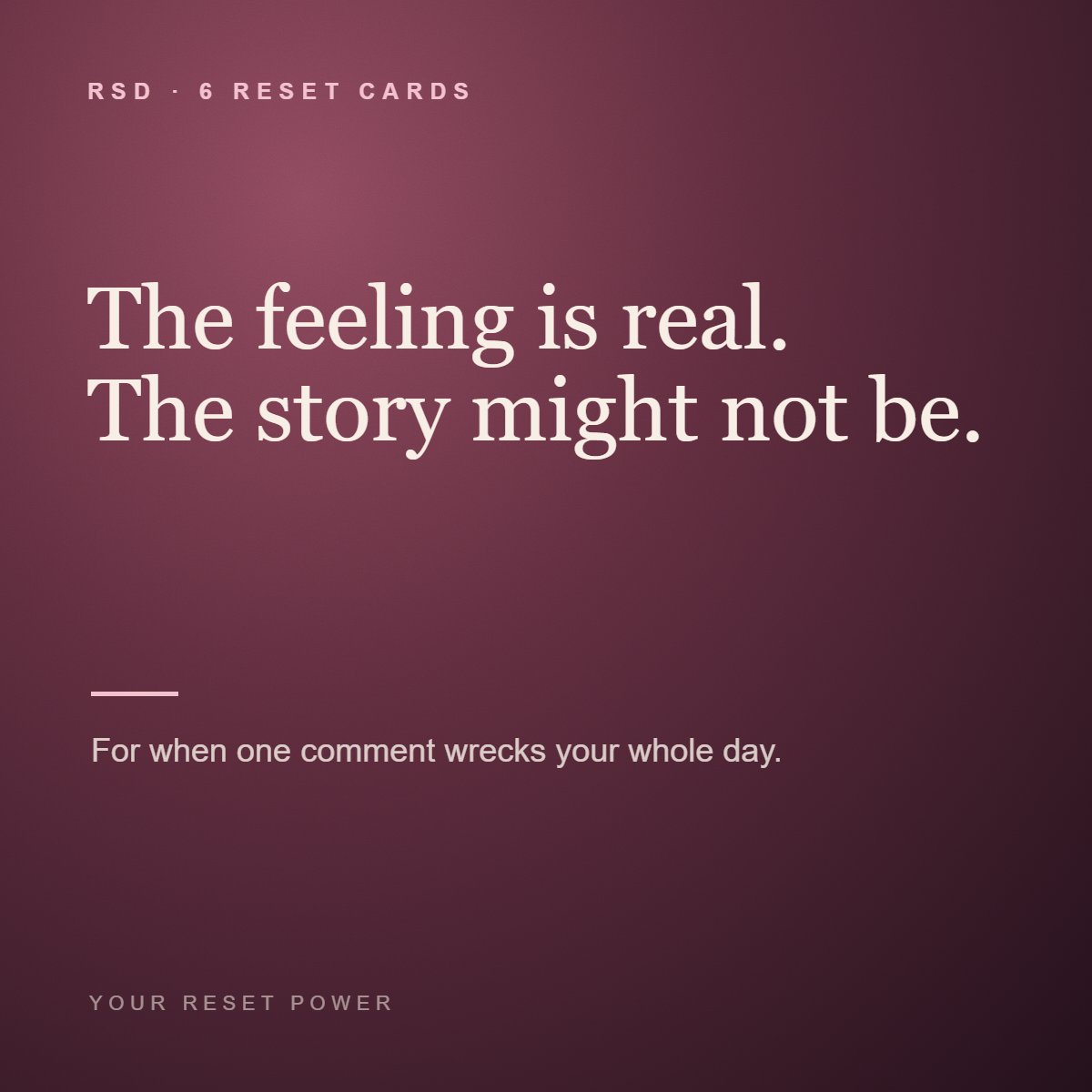
RSD cards
For when one comment or a flat reply ruins your whole day. Helps you separate what happened from what you think it means, and wait before you reply.
These cards are for when you guess what they meant and assume the worst. If someone is being unkind on purpose, or it keeps happening online or at school, that isn't RSD. Screenshot it and tell an adult you trust.
Download the cards →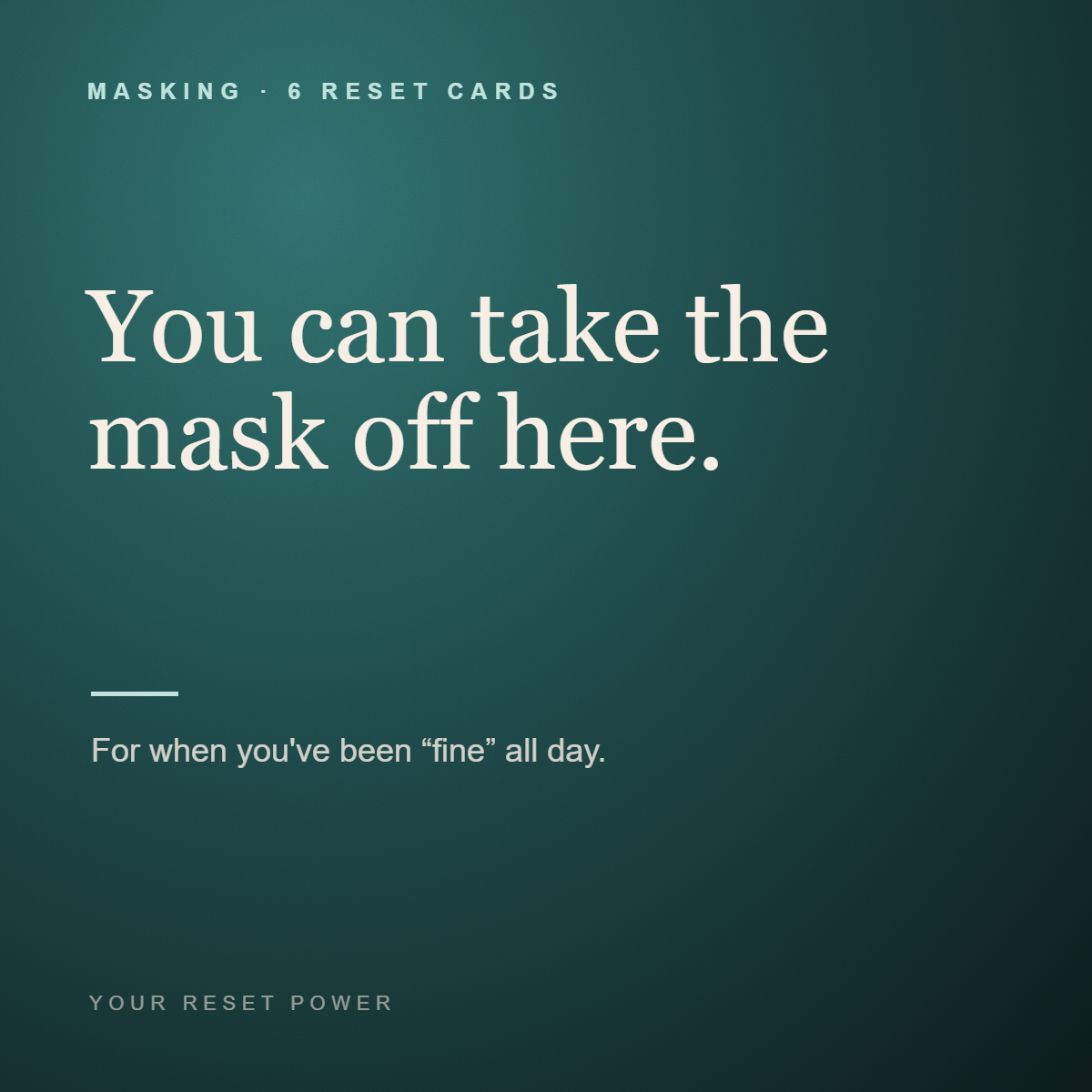
Free card pack
Masking cards
For when you've acted fine all day and have nothing left by the time you get home. Helps you find five minutes to stop and recover.
Download the cards →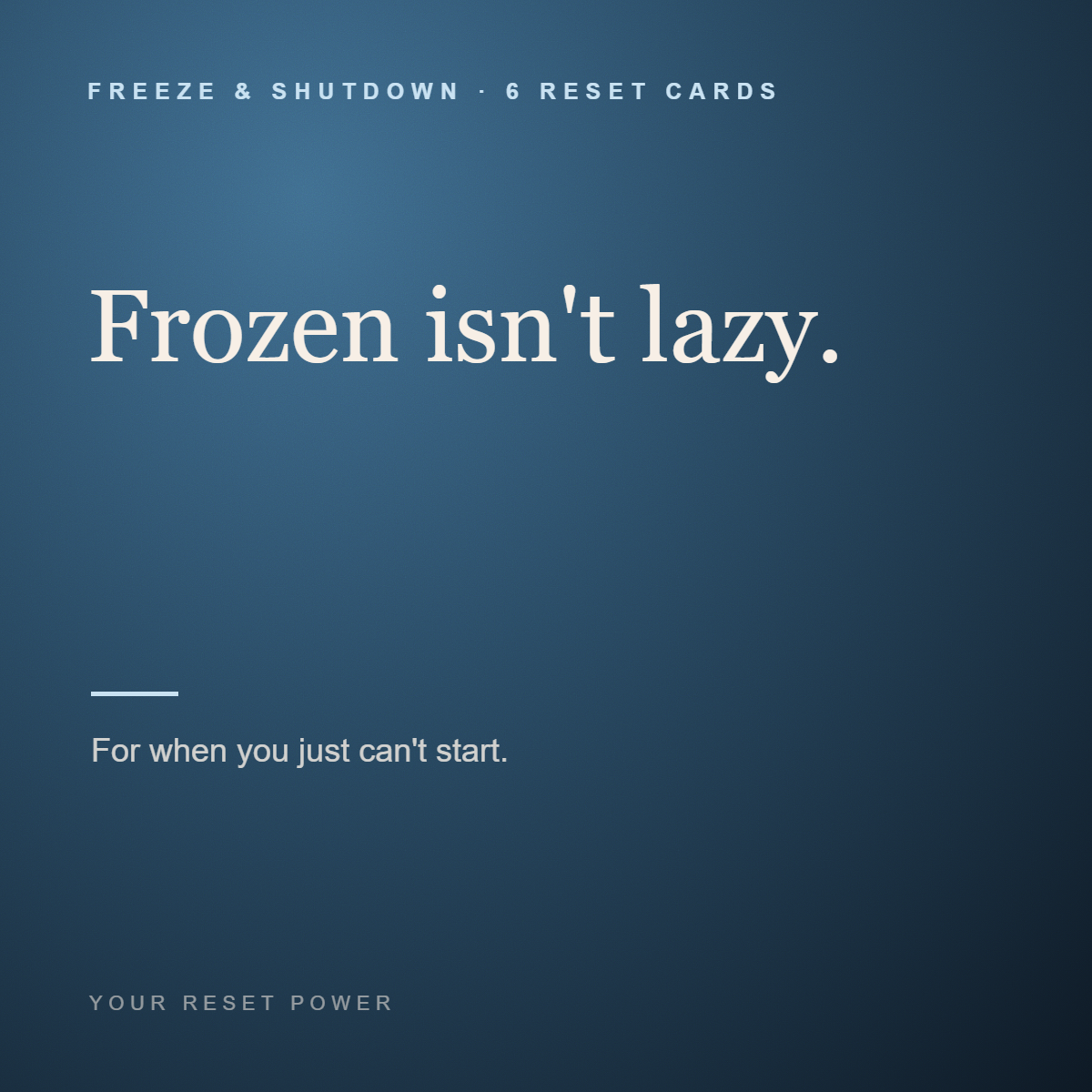
Free card pack
Freeze and shutdown cards
For when you can't start, or you go blank and numb. Helps you do one small step instead of the whole list.
Download the cards →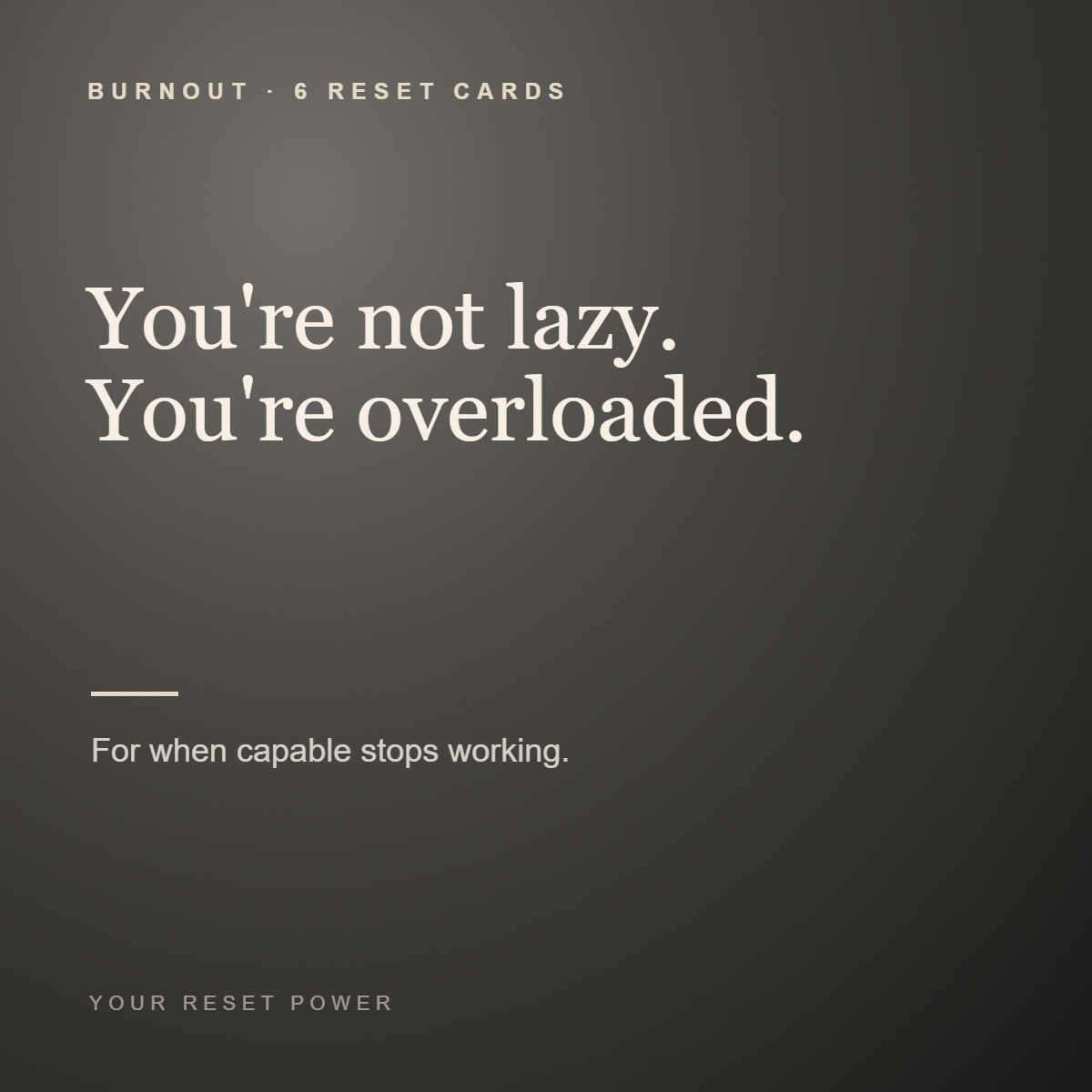
Free card pack
Burnout cards
For when you've kept going for too long and you're very tired. Helps you drop one thing and rest before you run out.
At school, dropping one thing can mean asking a teacher or your school's learning support coordinator (SENCO in the UK) for an extension. If nothing has felt good for two weeks or more, or you feel hopeless, talk to your doctor (GP), school nurse or Childline (UK).
Download the cards →
Free card pack
The 2AM spiral cards
For when your brain won't stop at night. Helps you leave the thought until morning so it's easier to get back to sleep.
These cards are for worry loops. If at night you're thinking about hurting yourself, don't wait until morning. In the UK, Childline (0800 1111) and the YoungMinds Textline (text YM to 85258) are open all night. Not in the UK? Find the number for your country. If you can't leave your room, sit up, turn on a dim light and swap your phone for paper.
Download the cards →
Free card pack
Rage cards
For when anger comes before you can stop it. Helps you calm down and walk away.
Walking away means a different room, or asking a teacher for time out. Don't leave home or school on your own. If an adult at home scares you, that isn't your fault. Tell a teacher you trust or call Childline (UK) on 0800 1111.
Download the cards →At the bottom of the trackers there are links to paid card packs. You don't need them. The same packs are free for you on this page.
At home
Holding it in all day at school is called masking. Getting upset or snapping at home afterwards is what can happen when you stop. The people you feel safest with often see you at your most tired.
If you can, tell a parent or carer what's going on. You could show them this page. Or you could say: "School is really hard for me at the moment. Can we talk about it?"
If home doesn't feel safe, or someone is hurting you, you don't have to cope with it on your own. Tell a teacher you trust or call Childline (UK) on 0800 1111. Not in the UK? Find the number for your country. You won't get in trouble for asking for help.
A teacher may need to tell the school's safeguarding lead so you get help. They should tell you first.
If you think you might have ADHD
Only a specialist, usually a paediatrician or psychiatrist, can diagnose ADHD. In the UK, these are the usual first steps.
- Talk to a parent or carer. Tell them what you've noticed, with real examples from school and home.
- Talk to your school's SENCO. That's the teacher in charge of support for students who need extra help with learning. Your school might call it learning support.
- See your GP. Your GP or school can refer you, often to a children's ADHD or neurodevelopmental service, sometimes CAMHS. In England you may be able to choose where you're assessed (Right to Choose). Ask your GP.
Outside the UK, start the same way. Talk to a parent or carer and your family doctor. Your school can help too.
The assessment will usually need input from a parent or carer and your school.
In the UK, from about 13 you can usually ask to see a GP on your own. If the GP thinks you understand, they'll keep it private unless they think you or someone else is at serious risk. They'll probably suggest involving a parent, and an ADHD assessment usually does. Outside the UK, rules on seeing a doctor without a parent vary by country.
Help at school, with or without a diagnosis
Waiting lists can be long. While you wait, school can still put support in place based on what you need. You don't always need a diagnosis first.
Tell a teacher you trust, or your school's learning support coordinator (SENCO in the UK), what helps you. For example, sitting near the front, written instructions as well as spoken ones, a reminder before a deadline, or a quiet way to ask for a break.
In the UK, exam access arrangements, such as rest breaks or a room with fewer people in it, can help too. You don't always need a diagnosis. Arrangements have to match how you normally work in class, so ask your SENCO early, in Year 9 or 10 if you can. Outside the UK, ask your school about exam adjustments.
The trackers can help here. If you log what happens for a few weeks, you'll have real examples to show the adults helping you.
If you take ADHD medication
Don't change your dose or the time you take it without talking to your parent or carer and the doctor who prescribes it. Never share or sell your medication, and don't double up if you miss a dose.
Where your tracker entries go
Your entries
The trackers save what you log in this browser, on this device. They don't send your entries to me or to anyone else, and nobody reads them.
That also means anyone who uses the same phone, tablet or laptop can see them. If your mum, dad, brother or sister picks up your phone and opens the tracker, they'll see everything you logged.
On a school device, school may see what you type, not just which sites you visit. Incognito is often switched off on school devices.
Each tracker has a "Clear all history" button. If you clear your browser data, your entries go too. On your own device, a private or incognito window deletes them when you close it.
If you're writing in a tracker because you're not safe, nobody will see it in time to help. Tell a person as well. In the UK, call Childline on 0800 1111. Not in the UK? Find the number for your country.
If you need to talk to someone
Thinking about self-harm or suicide? Tell someone today. In the UK: Childline 0800 1111, or Papyrus HOPELINE247 on 0800 068 4141 or text 88247. In danger now, call 999.
Childline (UK): 0800 1111, free, any time. You can also chat online with a counsellor at childline.org.uk. You can talk about anything. It doesn't have to be an emergency.
Prefer to text? Text YM to 85258 for the YoungMinds Textline (UK), free, any time.
Need help fast but it's not an emergency? In England, Wales or Scotland, call NHS 111 and choose the mental health option. In Northern Ireland, call Lifeline on 0808 808 8000.
Childline (UK) keeps what you say private. They only might need to tell someone if you ask them to, if your life or someone else's is in danger, if someone like a teacher, coach or doctor is hurting you, or if you're seriously hurting someone. Read their full promise at childline.org.uk.
Calls to Childline (UK) won't show on the phone bill. They will show in your call history unless you delete it.
Not in the UK? In danger, call 911 (US, Canada), 000 (Australia), 111 (New Zealand) or 112 (Ireland and Europe).
To talk to someone: call or text 988 (US, Canada), 13 11 14 (Australia), call 1737 or text 1737 (New Zealand), 116 123 (Ireland).
Lines for young people in other countries are on the help page. More free trackers and guides are on the free tools page (some pages there are for adults).
I'm Jeanette. I have ADHD and I run this site. I'm not a doctor or a therapist, and this page isn't medical advice. If something here doesn't match what your doctor has told you, go with your doctor.